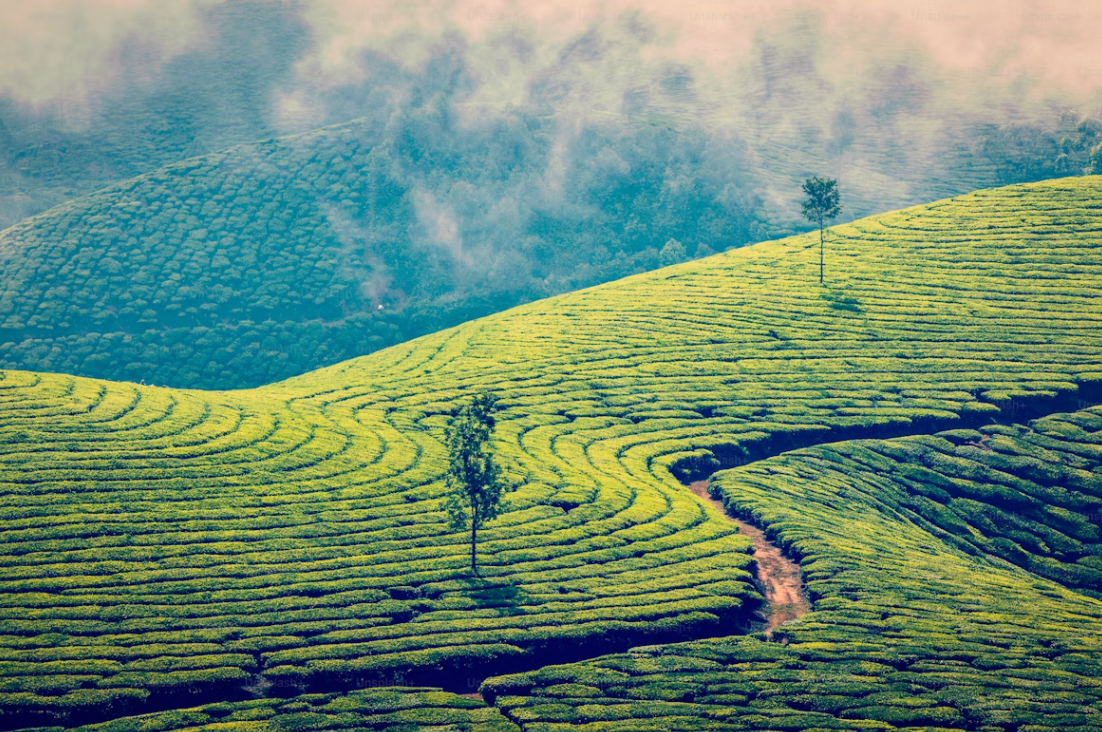
High in the misty folds of Kerala’s Western Ghats lies Munnar, a land of serene hills, emerald-green tea estates, and whispering clouds that drift lazily across the landscape. Known for its captivating beauty and soothing climate, this hill station is often described as nature’s own masterpiece—a place where every leaf, breeze, and stream seems to move in perfect harmony. With its colonial charm and breathtaking scenery, Munnar has long been a haven for travellers seeking both peace and wonder.
The Heart of Kerala’s Highlands
Munnar sits gracefully at around 1,600 metres above sea level, surrounded by rolling mountains and fertile valleys. The town takes its name from the confluence of three rivers—Mudrapuzha, Nallathanni, and Kundala—which meet in its centre. This trinity of waterways symbolises the balance that defines Munnar: the seamless blending of history, nature, and human warmth.
Originally established as a summer retreat during British rule, Munnar retains traces of its colonial heritage. Old bungalows with sloping roofs, neatly trimmed lawns, and winding paths evoke a bygone era of refinement. Yet, the true soul of Munnar lies not in its architecture but in its landscapes—where tea bushes roll across the hills like a living carpet and wisps of cloud descend to kiss the earth.
A Journey Through Green Infinity
The tea plantations of Munnar are among the most extensive in the world. Stretching across thousands of acres, they define the region’s identity, economy, and beauty. These vast estates were first cultivated in the late 1800s by British planters who recognised the region’s perfect combination of cool temperatures, rich soil, and abundant rainfall. Today, the legacy of those early efforts continues, shaping the rhythm of life for countless local communities.
A walk through the plantations is an experience unlike any other. The narrow trails wind between neat rows of tea bushes, revealing panoramic views of valleys below. The air is fresh and perfumed with the subtle aroma of tea leaves. Workers can often be seen moving gracefully through the fields, plucking the tender green shoots that will later become the flavourful teas for which Munnar is renowned. There is a quiet dignity in this daily ritual—a timeless harmony between human effort and nature’s bounty.
For anyone visiting Kerala, few sights are as captivating as the sunrise at Munnar tea gardens, where soft light spreads across the rolling hills, illuminating the mist and turning the entire landscape into a shimmering sea of green. It is a moment that feels almost sacred, when the boundary between earth and sky seems to blur.
The Tale of Tea: A Heritage Preserved
The history of Munnar’s tea industry is best explored at the Tata Tea Museum, located near Nallathanni Estate. The museum traces the evolution of tea cultivation in the region, from its colonial beginnings to its present-day significance. Exhibits showcase vintage machinery, photographs, and documents that reveal how the British planters developed Munnar into a thriving centre of tea production.
Visitors can observe the various stages of tea processing—right from withering and rolling to fermentation and drying. A visit often concludes with a cup of freshly brewed local tea, its flavour as crisp as the mountain air. The experience leaves one with a deeper appreciation of the labour, craftsmanship, and tradition behind every sip.
Nature’s Canvas: Munnar’s Most Captivating Sights
While tea dominates the landscape, Munnar offers a wealth of natural wonders beyond its plantations. Each destination reveals a different side of the region’s charm, from shimmering lakes to towering peaks.
Eravikulam National Park
A UNESCO-recognised biodiversity hotspot, Eravikulam National Park spreads across nearly one hundred square kilometres and serves as a sanctuary for the endangered Nilgiri Tahr. The park’s grasslands and mist-draped valleys offer breathtaking vistas, especially from the slopes of Anamudi Peak—the highest point in South India. During certain years, the park transforms into a purple paradise when the Neelakurinji flower blooms, a rare event that occurs only once every twelve years.
Mattupetty Dam and Lake
Set amidst lush greenery, Mattupetty Dam is one of Munnar’s most tranquil retreats. Its still waters mirror the surrounding hills, creating a scene of perfect symmetry. The adjacent lake offers opportunities for boating and picnicking, while the nearby Indo-Swiss Dairy Farm highlights the area’s progressive agricultural practices. The entire region exudes a calm, reflective beauty.
Echo Point
As the name suggests, Echo Point is famous for its natural echo phenomenon. Shouts or songs resound across the valley and return as playful echoes, delighting visitors of all ages. The setting—surrounded by rolling hills, shola forests, and misty breezes—makes it a favourite for photographers and nature lovers alike.
Kundala Lake
Located approximately 20 kilometres from the main town, Kundala Lake lies cradled by hills and forests. The lake’s gentle ripples and surrounding cherry blossom trees create a scene reminiscent of a fairytale. Pedal boats and rowboats are available, offering a peaceful way to explore the waters. On certain years, the lake’s banks bloom with Neelakurinji, adding a rare touch of violet splendour.
Attukal Waterfalls
Attukal Waterfalls, situated between Munnar and Pallivasal, is a vision of wild beauty. The water cascades dramatically down rocky slopes into a gorge below, framed by dense greenery. The site is particularly enchanting during the monsoon season when the falls are at their most powerful. Trekkers often frequent this area, drawn by its scenic trails and natural serenity.
Adventure in the Hills
Beyond its tranquil facade, Munnar also caters to those seeking adventure. The hilly terrain, winding paths, and forested valleys provide ideal conditions for trekking, cycling, and off-road exploration. Trails to Meesapulimala, the second-highest peak in the Western Ghats, offer both challenge and reward, with panoramic views that stretch endlessly across the horizon.
Jeep safaris through the tea and spice plantations allow visitors to venture deeper into Munnar’s wilderness, uncovering viewpoints hidden from the main roads. Birdwatchers find endless fascination here, as Munnar is home to a wide variety of species, from colourful bulbuls to the melodious Malabar whistling thrush. Every sound and sight in these hills tells a story of thriving life.
A Taste of the Mountains
Food in Munnar is a delightful reflection of Kerala’s culinary richness, influenced by the freshness of its produce and the generosity of its spices. From traditional Kerala meals served on banana leaves to comforting plates of appam with stew, each dish carries the warmth of the region’s culture. Freshly caught fish from nearby rivers and lakes often feature in local cuisine, spiced with pepper, cardamom, and clove grown in the surrounding plantations.
Spice markets in the town centre are an essential stop for any visitor. Their air is heavy with the scent of cardamom and cinnamon, and vendors proudly display the produce of the hills. Many travellers leave with small parcels of tea, coffee, and spices—souvenirs that capture the taste of Munnar’s hills.
Staying in Harmony with Nature
Accommodation in Munnar ranges from luxury resorts and heritage bungalows to humble homestays nestled among the plantations. Many properties have embraced eco-friendly principles, using sustainable materials, solar energy, and waste-reduction systems to protect the environment. The views from these hilltop retreats are often nothing short of spectacular—valleys carpeted in green, clouds swirling around distant peaks, and the occasional sight of wildlife moving gracefully through the forest edge.
Hospitality here reflects the quiet generosity of the region. Guests are treated not as visitors but as part of a larger story—one that values simplicity, comfort, and a deep respect for the natural world.
Seasons of Beauty
Munnar is beautiful throughout the year, with each season revealing a different personality.
- Summer (March to May): The days are mild, making it ideal for sightseeing and long walks through the plantations.
- Monsoon (June to September): The hills turn lush and dramatic as rain revives every stream and waterfall. This is the season of renewal, when the scent of wet earth lingers in the air.
- Winter (October to February): Crisp mornings and cool evenings make this the perfect time for outdoor exploration and photography. The skies are clear, offering unhindered views of distant ranges.
Each season leaves its own impression, ensuring that no two visits to Munnar ever feel the same.
Culture and Community
The people of Munnar form the heart of its enduring charm. The region’s population includes diverse communities such as Tamil, Malayali, and tribal groups like the Muthuvan. Their traditions, art, and hospitality give Munnar its cultural depth. Local festivals such as Onam bring bursts of colour and joy, with music, dance, and traditional feasts celebrating the harvest season.
Markets and small shops offer handcrafted goods, natural oils, and local delicacies. Many of these items are made by local artisans, helping sustain age-old crafts and livelihoods. Through every smile and exchange, visitors experience the warmth that defines Kerala’s spirit.
Sustainability and the Future
As tourism grows, so too does awareness of environmental responsibility. Munnar’s ecosystem is fragile, and numerous initiatives have been launched to ensure its preservation. Local organisations and the government promote waste management, reforestation, and awareness programmes encouraging travellers to leave minimal impact.
Eco-tourism efforts, including guided nature walks and educational tours, have also gained popularity. These initiatives not only protect Munnar’s biodiversity but also empower local communities by providing sustainable income sources. Responsible travel here is not just encouraged—it is essential for maintaining the region’s delicate harmony.
Where Earth Meets Sky
To witness Munnar at its best is to understand the rare balance it embodies. The rolling tea hills seem endless, the mist floats like a soft veil, and the entire landscape feels alive yet unhurried. There is a rhythm in its silence, a poetry in its stillness. Every moment spent in these hills seems to invite reflection, reminding travellers of the beauty that exists when humanity and nature coexist in peace.
Munnar is not simply a place to visit—it is a feeling to absorb. The air carries the scent of tea and rain, the evenings bring the hush of mountains, and every sunrise unfolds like a promise. In an age defined by noise and haste, Munnar stands as a tranquil reminder that true beauty lies in simplicity and stillness.
For those seeking escape, renewal, or inspiration, Munnar offers all three—wrapped in mist and cradled by the mountains. It is a world where time slows, hearts calm, and nature speaks in whispers that linger long after the journey ends.